Cafe & Restaurant

Running a food and beverage business is not just about cooking delicious meals or serving great drinks — it’s also about making sure every plate and every cup brings in real profit. Too often, small food operators, home-based sellers, and even cafés lose money without realizing it, simply because they don’t calculate their costs properly. That’s why I created F&B Ready-to-Use Costing — a practical tool that takes away the stress of complex accounting and gives you simple, ready-made costing sheets you can use immediately. With just a few clicks, you’ll know exactly how much each recipe costs, how to set the right selling price, and how to protect your hard-earned revenue.
I’ve spent years working as a Chartered Accountant and Finance Manager, helping businesses manage their numbers. At the same time, I’ve also worked in the F&B industry — from 5-star hotels to golf clubs, even learning the art of coffee as a barista. Along the way, I’ve seen a common problem: many talented food entrepreneurs know how to cook, but struggle with costing and pricing. Some sell their food too cheaply without realizing they’re making a loss, while others overprice and lose customers.
That’s why I decided to create F&B Ready-to-Use Costing. It combines my finance expertise with real kitchen experience, packaged into simple tools you can start using right away. My goal is to save you time, reduce your stress, and help you focus on what you love most — creating delicious food — while making sure every plate brings in healthy profit.
The Basics of Food Costing
Before we dive into the ready-to-use costing sheets, let’s go through the basics. Don’t worry — I’ll keep it simple and practical.
✅ What is Food Costing?
Food costing means calculating exactly how much it costs you to prepare one portion of a dish. This includes the price of all the ingredients used in the recipe, divided according to the portion size.
Example:
- You buy 1kg of chicken for RM20.
- You only use 200g for one plate.
- The cost of chicken per plate = RM20 ÷ 1000g × 200g = RM4.00.
✅ Why is Food Costing Important?
- Prevents Loss – Many sellers don’t realize they’re selling at a loss.
- Sets the Right Price – You’ll know the minimum selling price to cover costs.
- Builds Confidence – When expanding, you can calculate profit accurately.
- Helps You Compete – You can price smartly without undercutting yourself.
✅ The Simple Formula
Here’s the easiest formula you need to remember:
{Food Cost %} = {Ingredient Cost per Dish} / {Selling Price}}\right) X 100 = Food Cost %
👉 For healthy profit, most F&B businesses aim for Food Cost % between 25% – 35%.
How to Use the Templates
I’ve designed the costing sheets to be simple, flexible, and ready to use. You don’t need to be an accountant — just follow these easy steps:
🥘 Step 1: List Your Ingredients
Type in all the ingredients used for one recipe. Example: rice, santan, pandan leaf, ikan bilis.
🧮 Step 2: Enter Purchase Price & Quantity
Fill in the cost of ingredients as you bought them. Example:
- 1kg of rice = RM5.00
- 1 liter santan = RM6.00
The sheet will automatically calculate the cost per gram/ml/unit.
🍽️ Step 3: Enter Portion Size
For each recipe, enter how much of the ingredient you use in one portion. Example:
- 150g rice
- 50ml coconut milk
The sheet calculates the exact cost per portion for you.
💰 Step 4: Review Total Cost per Dish
At the bottom, the template shows the total ingredient cost per portion (e.g., RM3.20 for one nasi lemak).
🏷️ Step 5: Set Your Selling Price
Decide how much profit margin you want. The template gives you a recommended selling price based on a 25–35% food cost target.
Example:
- Total cost = RM3.20
- Selling price (30% cost) = RM10.70
You now know the minimum price to charge without losing money.
Example: Nasi Lemak Costing
To make things clearer, let’s walk through a real costing example using Malaysia’s favorite dish
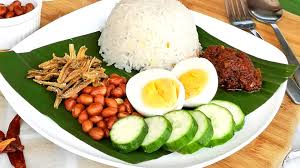
– Nasi Lemak –
🥘 Ingredients Breakdown
A) Nasi Lemak (Rice)
- Beras (150g per portion) → RM0.75
- Santan (50ml per portion) → RM0.30
- Daun Pandan (1 helai) → RM0.10
- Garam & halba (small portion) → RM0.05
Subtotal Rice = RM1.20
B) Sambal Tumis
- Cili kering (20g) → RM0.80
- Bawang merah & bawang besar (30g) → RM0.40
- Gula Melaka & air asam → RM0.25
- Minyak (30ml) → RM0.60
Subtotal Sambal = RM2.05
C) Side Dishes
- Ikan bilis goreng (20g) → RM1.20
- Kacang tanah goreng (15g) → RM0.40
- Telur rebus (1 biji) → RM0.60
- Timun (3–4 keping) → RM0.15
Subtotal Side Dishes = RM2.35
🧮 Total Cost Per Portion
Rice = RM1.20
Sambal = RM2.05
Side Dishes = RM2.35
👉 Total Ingredient Cost = RM5.60 per portion
🏷️ Suggested Selling Price
Now, let’s apply the Food Cost % formula.
- If you sell at RM12 → Food Cost % = 46.7% ❌ (too high, not enough profit).
- If you sell at RM16 → Food Cost % = 35% ✅ (ideal).
- If you sell at RM18 → Food Cost % = 31% ✅ (better margin).
🌟 Key Learning
From this example, we see that although Nasi Lemak looks simple, ingredient cost can add up quickly — especially sambal and side dishes. With proper costing, you can confidently set a selling price that ensures healthy profit while staying competitive.
Practical Tips to Control Food Costs
Food costing is not just about numbers — it’s about smart kitchen management. Here are some practical strategies:
1️⃣ Buy in Bulk (But Smartly)
- Ingredients like rice, oil, sugar, and dry chilies are cheaper in bulk.
- Be careful with perishable items like santan and vegetables — only buy what you can use before they spoil.
2️⃣ Portion Control
- Use standard scoops, ladles, and weighing scales to ensure consistency.
- Even 10g extra rice per plate, multiplied by 100 plates, can reduce profit significantly.
3️⃣ Control Wastage
- Store ingredients properly to extend shelf life.
- Label stock with FIFO (First In, First Out) so old items are used first.
- Train staff not to over-prepare sambal or side dishes.
4️⃣ Monitor Food Cost % Regularly
- Don’t wait until the end of the month.
- Check your costing weekly, especially if supplier prices increase.
- Update your costing sheet — your template makes this easy.
5️⃣ Negotiate with Suppliers
- Build good relationships with suppliers.
- Ask for discounts on large orders or consistent purchases.
- Compare prices from different suppliers to get the best deal.
6️⃣ Offer Add-Ons & Premium Versions
- Example: Upgrade nasi lemak with rendang ayam or sotong sambal.
- Customers love options, and you can increase revenue without raising the base price too much.
✨ With these tips + your costing sheet, your readers will feel they have a complete system: not only how to calculate, but also how to save money and increase profit.
Closing Thoughts
Running an F&B business is never easy. Your passion is in creating delicious food that makes people happy — but without proper costing and pricing, even the best recipes can end up losing money.
That’s why I created this F&B Ready-to-Use Costing guide and templates:
- To save you time from building complicated spreadsheets.
- To give you clarity on your profit margins.
- To help you make smart, confident pricing decisions.
Remember, every successful F&B business is built on two key ingredients:
- Great taste that keeps customers coming back.
- Smart costing that ensures every plate sold contributes to profit.
Now it’s your turn. Use the templates, try them out with your menu, and adjust as you grow. The more you practice costing, the easier it will become — and soon, it will be second nature in your business.
Thank you for trusting me to be part of your F&B journey. May this guide bring you more rest, revenue, and resilience in your business. 🌿✨